When we think of summer, it’s not just all about bright days, sunny mornings, and scorching afternoons. It’s not only finding shades or making yourself comfortable within air conditioners. Something behind these steals your shows and makes you concerned about these lingering heat waves and high humidity. A certain health issue that occurs along with high temperatures, which contributes to overheated body temperature, leading to serious summer health consequences. Heat stroke, a silent but life-threatening heat-related illness, has no second chance and needs immediate medical attention if not properly managed.
It can rapidly increase with various organ damage, such as the brain, kidneys, or heart. In this blog, we reveal heat stroke causes, symptoms, and how it develops.
What is a heat stroke?
Heat stroke is a severe condition, also known as sun stroke, in which the body overheats and cannot regulate its temperature; prompt medical attention is required. This condition occurs when you are in extreme heat or doing heavy physical activity. It diminishes the circulation of body temperature, potentially leading to body overheating that causes fatal summer illnesses or permanent organ damage and disorders in brain functionalities.
Heatstroke is not the same as heat exhaustion or heat cramps—it is the most severe stage of overheating and a medical emergency that requires immediate medical attention. Brain dysfunction is also a key factor, which can cause severe damage to the body along with the nervous system.
What are the different types of heat strokes?
You can find mainly two types, including,
Classic (non-exertional) heat stroke:
Environmental heat (in cars, homes, or outdoors) can overwhelm the body’s cooling system—causing classic heat stroke, commonly seen in children and adults over 65 during heat waves.
Exertional heat stroke:
Exertional heat stroke occurs when intense physical activity generates more heat than the body can handle—often in hot weather but even in normal temperatures—and typically affects young, healthy adults.
Signs of heat stroke you should not ignore:
The primary heat stroke symptoms mostly happen in summer, when the temperature is higher than normal and if you are spending more time in sunlight. Others include,
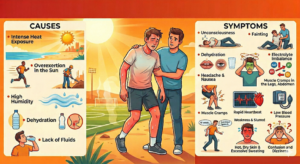
- Unconsciousness
- Fainting
- Dehydration
- Headache & nausea
- Electrolyte imbalance
- Muscle cramps in the legs, abdomen
- Rapid heartbeat
- Low blood pressure
- Weakness & slurred speech
- Hot, dry skin & excessive sweating
- Confusion and dizziness
What causes heat stroke in summer?
It occurs when your body temperature gets excessively high due to several factors, both internal and external. In this condition, body temperature regulation gets paused, and your body’s cooling mechanism fails to cool down your body. Several causes are,
- Prolonged time exposures to high temperatures increase your risk.
- Working or exercising in hot conditions—especially without proper hydration—can trigger exertional heat stroke.
- Dehydration or not enough fluid intake increases your risk of sunstroke in summer
- Wearing suffocating, warm, thick clothes in high temperatures may raise your body temperature excessively, causing sunstroke.
- Heat stroke chances increase for people over 65, for pregnant women, and if your body is already dehydrated or having cardiac issues that impair your body’s ability to regulate temperature.
- Outdoor sports during the high temperatures of peak summer often lead to an increased chance of sunstroke. Your body temperature spikes fast throughout these activities, like football, tennis, or long running, hydration drains quickly, and you feel intense physical exertion, dizziness, or less consciousness, which contribute to it.
Heat exhaustion vs heat stroke: Are they the same?
Though both are caused by the same causes, people often confuse to deal with heat exhaustion and heat stroke in the same manner.
Heat exhaustion happens when you are in peak heat for a long time, and your body can’t cool down with sweating, and you feel discomfort. If left ignored, it can progress to other consequences.
It is sometimes recognised as sunstroke, when your body temperature reaches the highest level, and you are in an extremely dangerous condition, where you need urgent medical support.
Anyone of any age may suffer from severe summer illnesses due to hot and humid weather, and it’s important to consult with a doctor immediately.
What does heat stroke actually feel like inside your body?
Severe heat stroke is associated with certain health complications like dehydration, excessive dizziness, sweating, vomiting and nausea. In some cases, you experience trouble thinking, an electrolyte imbalance, are unable to recognise persons, and have weaknesses. It can hit your brain so that you are unable to think properly, and immediate medical attention is needed.
Dehydration & heat stroke:
Both these conditions are related to heat-related disorders, and they are partially life-threatening if you fail timely diagnosis. Dehydration generally happens when your body is lacking enough bodily fluids, due to several health issues like diarrhoea, vomiting, and excess sweating. Severe dehydration in summer or extreme heat exposures causes heat stroke, when your body temperature turns extremely high, and fails to cool itself with sweating or other factors.
On hot and humid days, sweating alone may not be sufficient to cool your body effectively. This becomes even more critical when you are exercising or doing strenuous work in such conditions, as your body struggles to regulate its temperature.
Who are at a high-risk for heat stroke or sun stroke?
In some circumstances, a certain group of people has higher chances of heat stroke or responds to heat stress effectively.
Elderly & Young Children:
- Older adults: Poor thermoregulation.
- Infants/children: Limited hydration awareness & communication.
- Concerning signs: Lethargy, dry skin, and rapid breathing.
People with Chronic Illnesses or those who are using medications:
- People with diabetes, cardiovascular diseases, and respiratory diseases.
- People who take risk-enhancing drugs: Beta-blockers, antihistamines, and diuretics.
- These interfere with the body’s natural cooling system.
Athletes & Outdoor Enthusiasts:
High risk due to intense activity + heat exposure.
- Examples: Football players, endurance athletes.
- Key risks: Heavy gear, overexertion, peak-hour training.
Precautions:
- Train during cooler hours or reduced sunlight
- Hydrate consistently
- Take breaks every 20–30 minutes
- Stay aware of early heatstroke symptoms
Outdoor Workers:
- Construction workers, gardeners, and delivery executives.
- Constant exposure to heat increases risk.
Prevention:
- Access to water and shade
- Scheduled breaks
- Protective clothing
- Workplace heat-safety protocols
Why emergency treatment is required:
- Prolonged exposure to the sun may lead to life-threatening risks or permanent organ damage
- Brain functionality can turn to disorders with confusion, dizziness, and rapid disorientation
- Within 30 minutes, it can develop dangerously
- Young children and older adults face greater danger.
Health risks after heat stroke:
If anyone is affected with severe heat stroke, it’s not just about overheating the body; it can lead to other complications associated with different organ dysfunction.
Brain dysfunction: Extreme heat can impair your neurological system, leading to unconsciousness, confusion and even coma.
Circulatory collapse (Hypovolemic shock): Excess fluid loss reduces your blood volume, decreasing your oxygen supply to vital organs.
Muscle breakdown (Rhabdomyolysis) and cramps: Due to intense heat stress, your muscle tissues break down and release harmful toxins into the blood.
Multi-organ damage: severe sunstroke leads to multiple organ failure,
- Lungs: Acute respiratory distress
- Kidneys: Renal failure
- Heart: Cardiac dysfunction
- Liver: Hepatic failure
First aid tips for heat stroke:
If anyone has early heat stroke symptoms, you should follow these tips for first aid.
- First, take the individual out of the sun to the shade areas
- Make him/her comfortable by fanning with something to cool him/ her
- Use a wet towel to his/her neck, face, and throughout the body to cool down body heat
- If available, apply ice water throughout the head
- Give water over his/her skin, face, neck, and all over the skin to keep him/her cool.
These are all instant remedies that you can apply to anyone who has the heat stroke symptoms. After that, take him/her to the nearest hospital or any healthcare clinic for instant medicine or treatment.
Preventive care tips for heat stroke risks:
With a bit of preparation, you can heal your body from extreme heat-related illness, especially heat stroke.
- Drink at least 2 to 3 litres of water daily to keep your body hydrated, and avoid electrolyte imbalance, dehydration during scorching summer days.
- Wear light-colored and lightweight clothes during summer to avoid any external heat creation and make yourself comfortable.
- If possible, limit your outdoor activities during peak heat hours of the day to avoid heat wave exposure.
- Try to manage your work outside during the cooler times of the day, like morning and evening
- Do not eat too much junk food; try to maintain a healthy and light diet during summer days.
- Opt for juices, watery fruits, and ORS if you feel down or maintain your protein and vitamin levels
- Acclimatise – gradually help your body adapt to heat by starting with shorter workouts and slowly increasing duration and intensity under guided supervision.
- Use a cooler, air conditioner instead of a fan if possible, when the temperature is extremely high, for cooling your indoors, and manage yourself to stay indoors within it
Heat stroke treatment process:
You should contact your nearest health care clinic or hospital for treating heat stroke. Healthcare personnel may apply instant cooling processes to cool down body temperature and give some instant relief medicines or IV injections to control the current emergency.
Though such tests can be recommended after seeing the symptoms of heat stroke, such as
- Blood tests
- Urine culture
- Eco-cardiograme
- Chest X-ray
Nirnayan Healthcare is the trusted and reliable laboratory in Kolkata for a timely and fastest report delivery facility for all types of pathology tests.
A Note from Nirnayan Healthcare:
Heat stroke is not limited only to extreme or intense workouts or heatwaves; it may even develop if you are in your home. Understanding what causes heat strokes in summer and how heat stroke happens is crucial to staying safe and secure. Often, rising body temperature combined with dehydration disrupts your body’s cooling system.
Recognising the early symptoms of heat stroke—such as dizziness, confusion, or fainting—is critical, as these are signs of heat stroke you should not ignore. In many cases, these heat stroke warning signs and causes can progress quickly, making it difficult for the person affected to seek help on their own. Contact Nirnayan Healthcare for any urgent blood tests or other screenings.